Three NC electric co-ops selected for DEQ funding to enhance grid resilience

Part of building a brighter future for more than 2.8 million North Carolinians means providing reliable energy that members can count on and strengthening a grid that is resilient and built to support our communities — today and into the future.
Three cooperatives, Four County EMC, Surry-Yadkin EMC and Tideland EMC were recently selected to receive funding from the North Carolina Department of Environmental Quality (DEQ) to support projects that enhance grid resilience and reliability. The co-op projects are among seven statewide receiving more than $20 million to improve North Carolina’s electric grid for the future.
According to the DEQ, the selected projects will update grid infrastructure to increase load capacity and resilience against severe weather, resulting in a more reliable and affordable electricity supply for North Carolinians.
Four County EMC
The DEQ funding will support Four County EMC’s Strengthening Transmission Efficiency and Enhancing Lifespan (STEEL) project, which includes upgrades to the transmission line running from Waycross to Turkey in Sampson County.
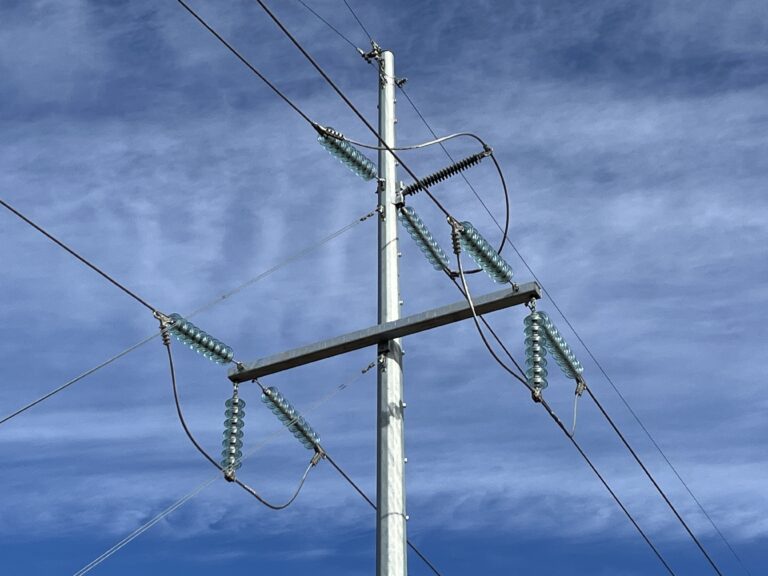
The project involves replacing 116 aging wooden poles with 140 engineered steel poles and installing larger-capacity conductors. These enhancements will bring boost wind resistance and improve power reliability across the region.
“At Four County EMC, we’re committed to building a stronger, smarter grid that supports the needs of our members today and in the decades ahead,” said Don Gatton, CEO of Four County EMC. “This investment reflects our focus on long-term reliability, resilience, and innovation — ensuring that the communities we serve have the infrastructure in place to thrive, even in the face of increasingly severe weather and growing energy demands.”
Surry-Yadkin EMC
Surry-Yadkin EMC’s Foothills Resiliency project will perform transmission and distribution upgrades to reduce outages caused by natural hazards by 35 percent.
The project also aims to create access to high-speed internet in underserved rural communities in Stokes, Surry, Yadkin and Wilkes counties.
“This grant is a vital investment in the future of our member-owners and the rural communities we proudly serve,” said Greg Puckett, executive vice president and general manager at Surry-Yadkin EMC. “It will allow us to strengthen reliability, expand access and support long-term growth across our service area. At Surry-Yadkin EMC, we’re committed to delivering safe, affordable and innovative energy solutions — and this funding helps us do just that.”
Tideland EMC
Tideland EMC’s Project Ocracoke Resiliency aims to reduce power outage duration by installing underground electrical lines and equipment and relocating aerial lines to less vulnerable areas.
Ocracoke Island receives power through a single transmission route — across Hatteras Inlet and along N.C. Highway 12 — an area that is highly susceptible to coastal erosion and severe storms. After years of erosion jeopardized that power path on the south end of Hatteras Island, Tideland invested $3.5 million to replace aerial infrastructure with a buried submarine cable.
The new funding will support an extension of armored submarine cable where it comes ashore at Ocracoke, along with the relocation of targeted aerial infrastructure away from the Atlantic Ocean.
The project will also support Ocracoke’s existing microgrid to further increase resilience and reliability.
“The rate of erosion and the increasing frequency of ocean overwash on the north end of Ocracoke since Hurricane Dorian now pose a routine risk to reliable electric service on the island,” said Paul Spruill, general manager and CEO of Tideland EMC. “Coming so soon on the heels of Tideland’s $3.5 million investment to address erosion on the south end of Hatteras Island, where we extended our submarine cable in 2020, we are tremendously grateful for this cost-sharing grant.”
Authorized by the Bipartisan Infrastructure Law, the funds are provided by the U.S. Department of Energy’s Grid Resilience State and Tribal Formula Grants Program.
These projects are just a few examples of how North Carolina’s electric cooperatives are working together to strengthen the grid and power a brighter future for their members. By embracing innovation and investing in resilient infrastructure, co-ops across the state are committed to delivering reliable, affordable electricity that supports the members and communities they serve.