Empowering Careers: Co-op lineworker shares how training schools sparked a journey of purpose

Growing up on Hatteras Island, Robbie Easley always wanted a career that would allow him to give back to his hometown community.
When the opportunity to work for Cape Hatteras Electric Cooperative (CHEC) arose, he didn’t think twice.
“It’s a privilege to work for Cape Hatteras Electric Cooperative,” Easley said. “When I’m in the bucket restoring power, I’m not just doing it for strangers—I’m helping my friends, neighbors and family. Serving the community that raised me is a great feeling.”
Not only has working for his hometown electric cooperative allowed Easley to give back, but he says CHEC has also invested in him and supported his career growth.
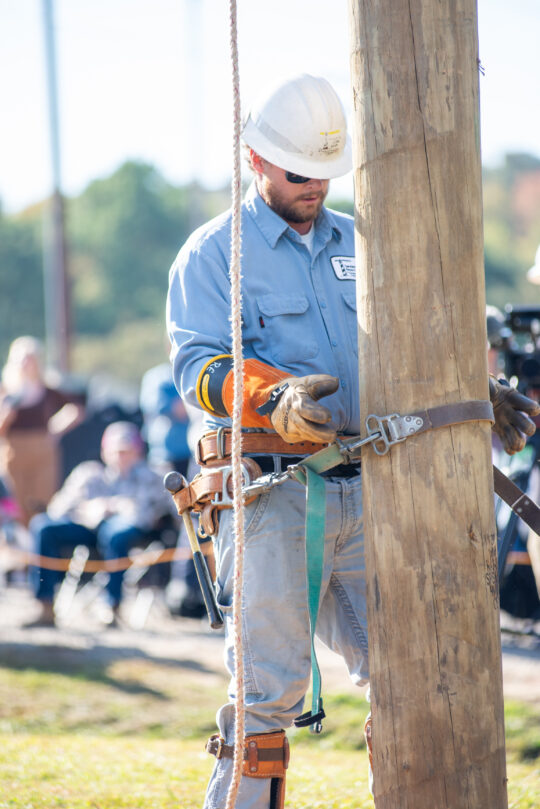
“CHEC has provided me with plenty of learning opportunities,” Easley said. “I completed the program at Nash Community College that took me from apprentice to first-class lineman, and I was recently promoted to crew leader. The cooperative has a devoted culture of safety that supports me and my crews in all aspects of our work, setting us up to complete our jobs safely and successfully.”
Education matters
February marks Career and Technical Education Month, and part of North Carolina’s electric cooperatives’ mission of powering a brighter future includes investing in the next generation of lineworkers.
Long before they climb their first pole or operate a bucket truck, lineworkers undergo rigorous education and hands-on training to ensure their safety and knowledge in the field.
Since 1998, North Carolina’s electric cooperatives have partnered with Nash Community College in Rocky Mount, which operates the Lineman Training Academy. The program was created by the co-ops to provide training for new lineworkers, as well as an opportunity for academic advancement—students can combine job training with an academic curriculum to graduate with an associate degree in two years.
Easley began his career with the co-ops in 2018, enrolling at Nash Community College.
“The knowledge passed down at these schools is essential for the future of the trade,” Easley said. “Learning from people with different backgrounds and approaches to the job is a valuable takeaway that I can bring back to my co-op.”
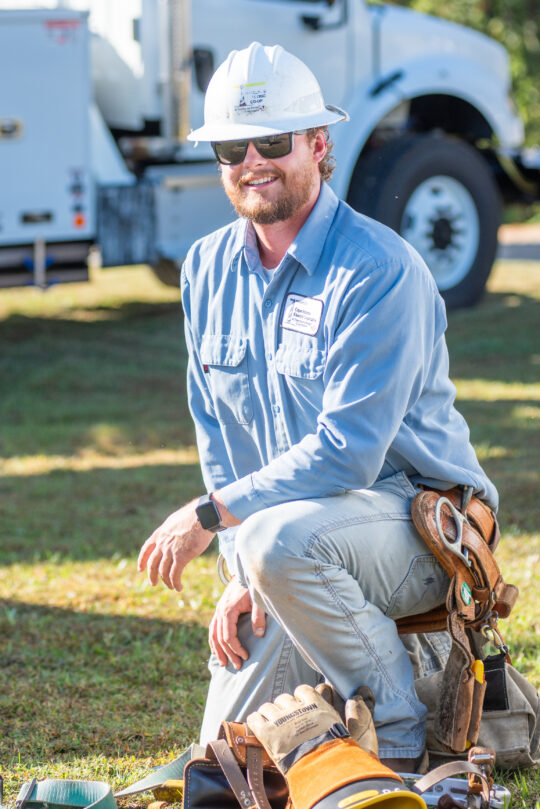
These schools teach lineworkers the fundamentals that will serve them for years, preparing them to build and maintain the lines that power more than 2.8 million North Carolinians. While Easley says the hands-on training is rigorous, it empowered him to feel both safe and confident in his role.
Not only did his time at Nash Community College build his skills and knowledge—skills he still uses more than six years later—but Easley says it also fostered relationships that he values today.
“I was fortunate enough to make some great friendships during my time at Nash,” Easley said. “I recently had a chance to work with a few of these friends during mutual aid trips in western North Carolina and Alabama. It’s really cool to see old classmates in the field, working together on storm restoration.”
Next generation of lineworkers
The lineworker profession continues to evolve with new equipment, technology and practices. North Carolina’s electric cooperatives remain committed to adapting to these changes, working with community colleges across the state on lineworker training programs and other workforce development initiatives.
Easley says he is thankful for the opportunities his cooperative has provided and encourages the next generation of lineworkers to stick with the career and keep learning.
“Stick with it, and you will be rewarded with a fulfilling career,” Easley said. “Listen to the older generation of lineworkers, and last but certainly not least—don’t take shortcuts. The lights will always come back on, but getting yourself home safe at the end of the day is the most important thing.”