Bright Ideas grant helps construction teacher build lessons that serve students and school

As a carpentry and construction teacher, Brian de Pedro strives to ensure every project he designs equips his students with practical skills while also creating something meaningful that benefits others.
That same goal was on his mind when he applied for his first Bright Ideas grant: building a shed to house gardening tools and essential items for the school’s exceptional children’s classes to accompany their school garden, which the students tend.
“To be able to build a curriculum that teaches my students, while also helping design a final product that benefits fellow teachers and students is the best of both worlds,” said de Pedro. “We’re doing something that pays dividends year in and year out and leaves a lasting impact on our school community.”
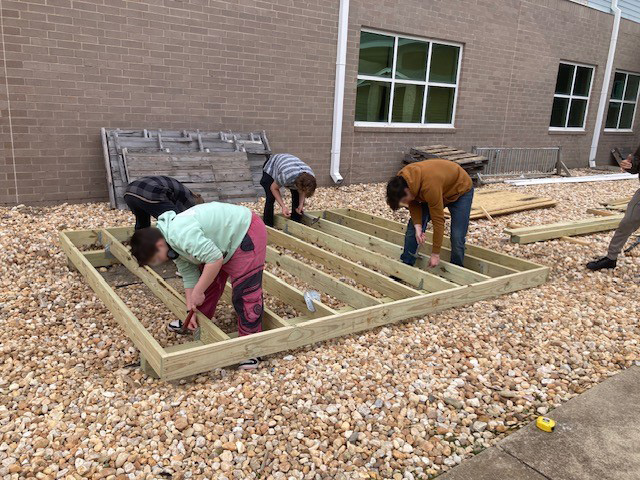
Over the course of the 2024-25 school year, de Pedro and his carpentry and construction classes at First Flight High School in Kill Devil Hills built the shed from the ground up.
Beginning with his Carpentry I class in the fall, students worked through every stage of framing — from building the floor system and walls to constructing the rafters and sheathing.
In the spring, his Carpentry II students finished the roofing, siding, windows and weatherproofing. In total, nearly 100 students played a part in the project.
de Pedro says his students gained experience in every aspect of the building process, seeing firsthand how individual skills come together to complete a project.
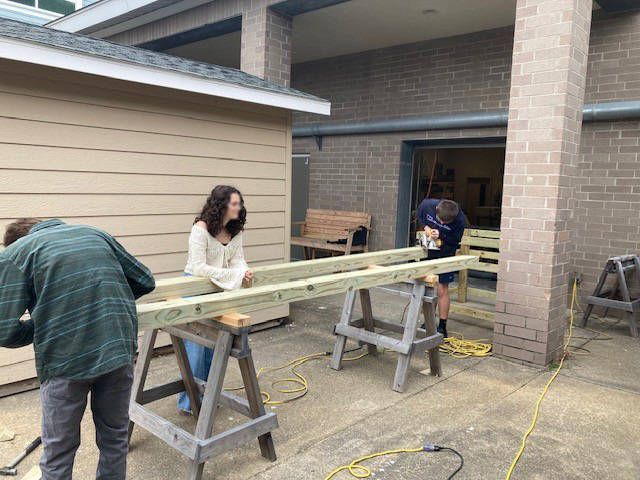
“What I like about a project like this is the teamwork aspect,” said de Pedro. “That’s the real world. Ultimately, when they get out into the real world — whether they’re in construction or not — they’re going to be working with groups of people. Bringing them together on a larger project with the goal of supporting a fellow class is what it’s all about as a teacher.”
With the support of a Bright Ideas education grant from North Carolina’s electric cooperatives, which provided essential supplies for the project, de Pedro says he was able to design an experience that was especially meaningful for his students.
“This was a huge boost to receive a grant like this because it covered some big costs and let us focus on teaching rather than worrying about funding,” said de Pedro.
Now, after receiving his first Bright Ideas grant, de Pedro says he plans to continue applying, building on these projects and experiences for his students.
“I’m already working on the next one,” said de Pedro. “I’ve never written a grant before, but it couldn’t have been any easier to apply, and I’m thankful for that as an educator.”
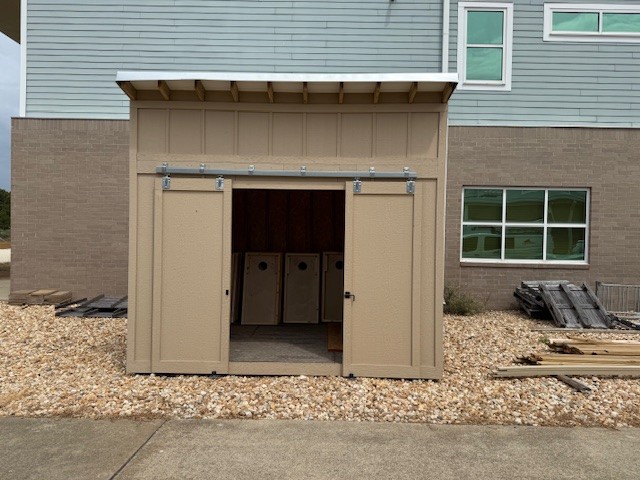
(Photo courtesy of Brian de Pedro).
A shared initiative of all 26 of North Carolina’s electric cooperatives, the Bright Ideas education grant program was created in 1994 to bring learning to life in classrooms across the state and support projects that might otherwise go unfunded.
Now in its 31st year, the co-ops have collectively awarded more than $16.5 million in grants, supporting nearly 15,400 projects and benefiting close to 4 million students statewide.
“It’s such a great thing that the co-ops do,” said de Pedro. “They look at their communities and understand what people need, providing support that goes beyond just keeping the lights on. Support like this matters, especially in small, rural communities like ours.”
The final deadline for submitting grant applications is Sept. 15 for most cooperatives. However, interested applicants are encouraged to visit their local co-op’s website for specific application requirements and deadlines.
To learn more and apply, visit www.ncbrightideas.com.